
Montmorency

Prunus cer. ‘Montmorency’ Taste: Freshly acidic, very juicy with a rich, fruity acidity balance (Too sour for most people)Harvesting time: JulyStorage: After processing/preparationLocation: Full sun, partial shadePruning: October, NovemberUse: Preparations, dessertsPollination: Self-pollinating.
Early river

Prunus av. ‘Early Rivers’ Taste: Soft, exceptionally juicy and pleasantly fresh-sweetHarvesting period: JuneStorage: Immediately after harvesting; short shelf lifeLocation: Full sun, partial shadePruning: October, NovemberUse: Edible, confit, dessertPollination: Not self-pollinating. Place one of the following species nearby (max. 100m away): BurlatNapoleon
Bigarreau Van
Prunus av. ‘Bigarreau Van’ Taste: Very sweet, richly flavored, firm and super crispyHarvesting time: JulyStorage: Immediately after harvesting; Short storage timePlace of cultivation: Full sun, partial shadePruning: October, NovemberUse: Hand cherry. If you want to get a lot of fruit, be sure to plant one of the following varieties nearby (max. 100m away): HedelfingerKordia
Bigarreau Napoleon

Prunus av. ‘Bigarreau Napoleon’ Taste: Freshly sweet, very tender and juicy with firm fleshHarvesting time: JulyStorage: Immediately after harvesting; Short storage timeLocation: Full sun, partial shadePruning: October, NovemberUse: Edible fruit, jam. Pollination: Not self-pollinating. Place one of the following species nearby (max. 100m away): HedelfingerEarly Rivers
Bigarreau Burlat
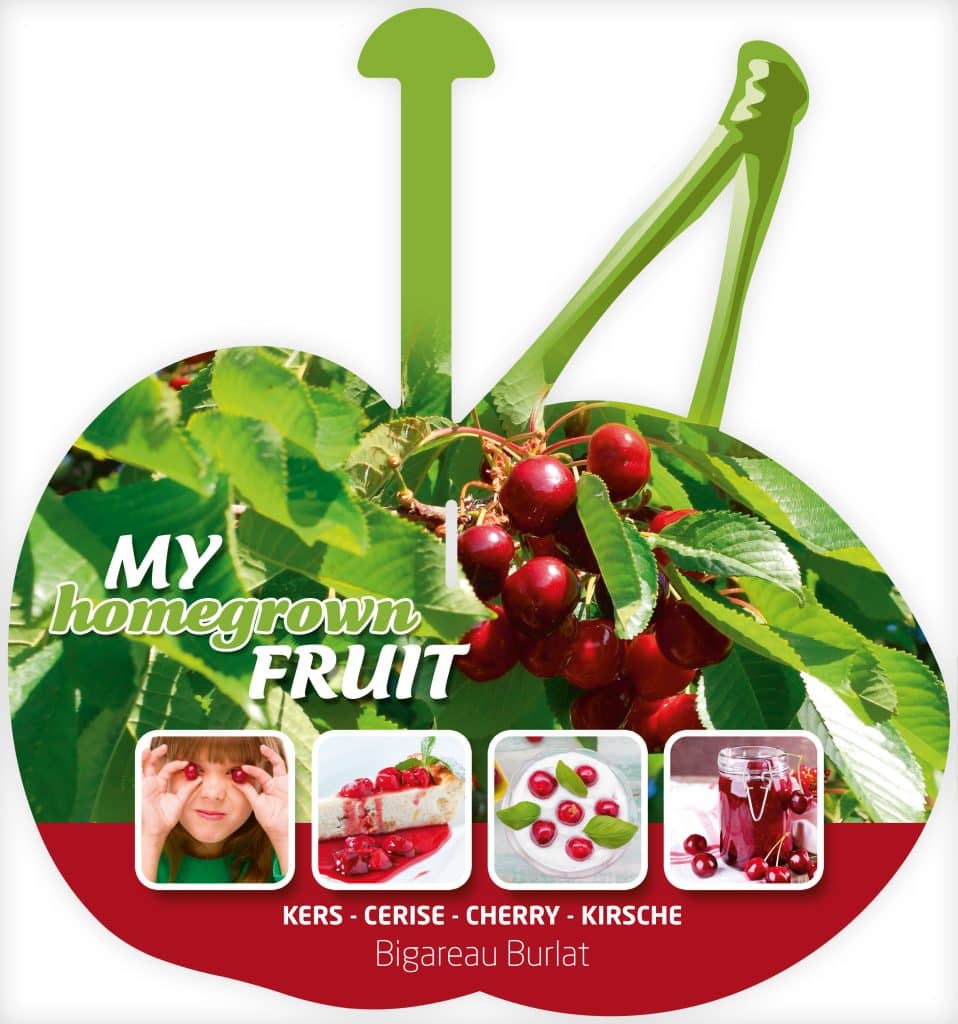
Prunus av. ‘Bigarreau Burlat’ Taste: Deliciously sweet, juicy, aromatic with firm fleshHarvesting time: JuneStorage: Immediately after harvesting; short shelf lifeLocation: Full sun, partial shadePruning: October, NovemberUse: Hand cherry, jam. Pollination: Not self-pollinating. Place the following varieties nearby (max. 100m away): Early RiversNapoleon
Quetsche d'Alsace
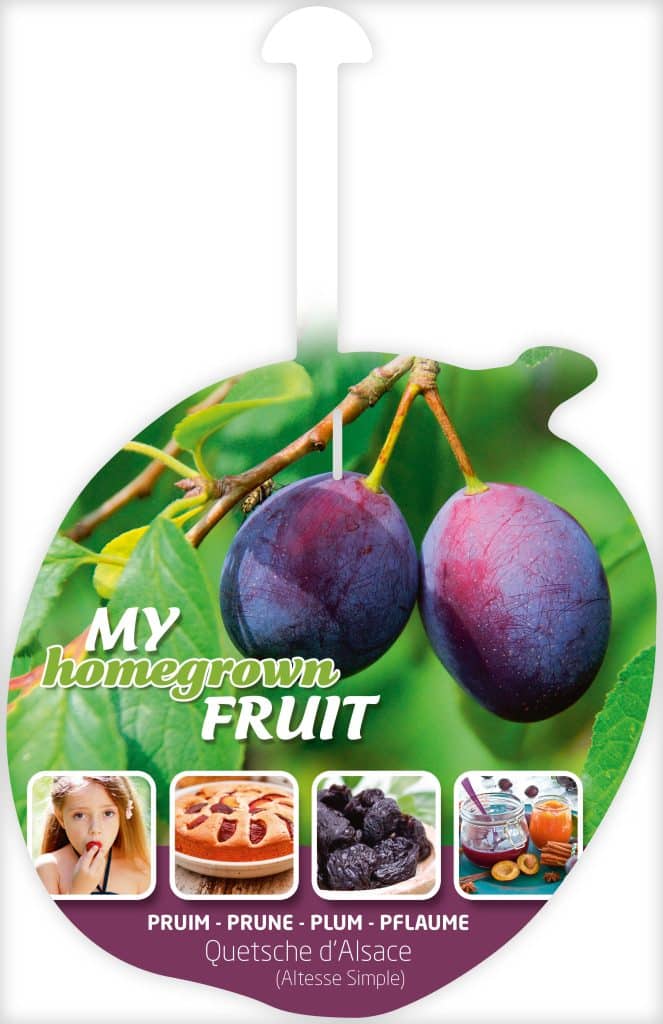
Prunus dom. ‘Quetsche d’Alsace’ (= Prunus dom. ‘Altesse Simple’)(= Prunus dom. ‘Hauszwetsche’) Taste: Spicy, sweet-sour, very concentrated, spicy and dry-stiffHarvesting time: SeptemberStorage: Immediately after harvestingPlace of cultivation: Full sun, partial shadePruning: October, NovemberUse: Eating pear, confit, cake, dry pearSelf-pollination
Queen victoria
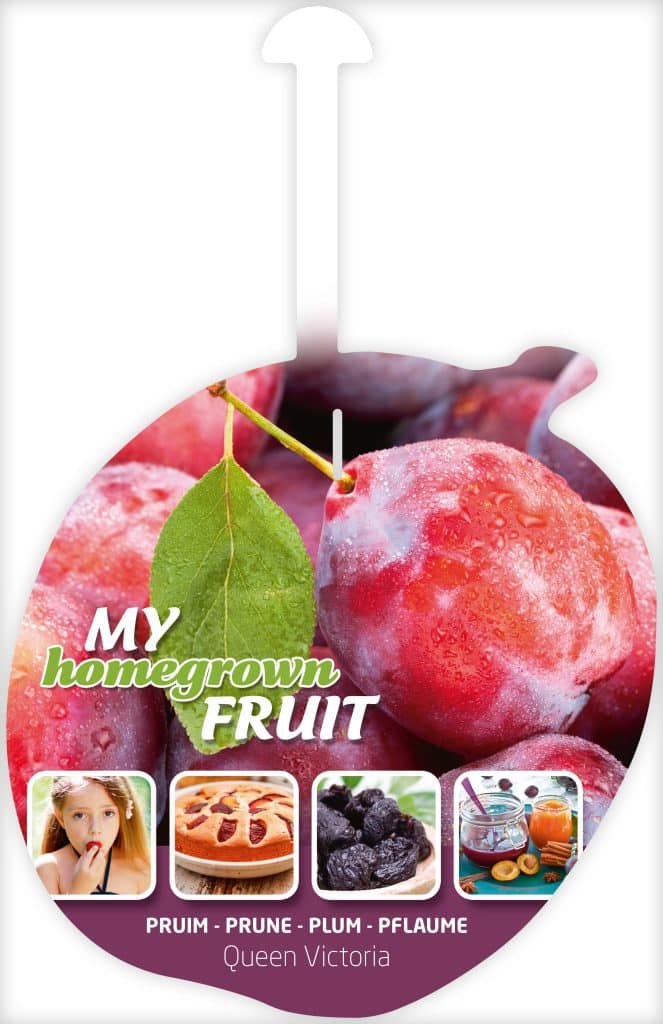
Prunus dom. ‘Queen Victoria’ Taste: Sweet, juicy and mildHarvesting period: August, SeptemberStorage: Immediately after harvesting; Short storage periodLocation: Full sun, partial shadeFruit period: August, SeptemberPruning: October, NovemberUse: Eating pear, Dessert, ConfiturePollination: Self-pollinating
Reine claude d'oullins
Prunus dom. ‘Reine Claude d’Oullins’ Taste: Sweet and soft, mild, very juicy with mild sour notesHarvesting time: AugustStorage: Immediately after harvesting; Short storage timeLocation: Full sun, semi-shadePruning: October, NovemberUse: Eating pear, jam and cakesPollination: Self-pollinating. If you want many fruits, place one of the following varieties nearby (max. 100m away): Reine Claude d’AlthanQueen VictoriaOpal
Reine claude d'althan
Prunus dom. ‘Reine Claude d’Althan’ (= Prunus dom. ‘Reine Claude Conducta’) Taste: Deliciously sweet, exceptionally juicy with a refined aromaHarvesting period: AugustStorage: Immediately after harvesting; Short storage periodLocation: Full sun, partial shadePruning: October, NovemberUse: Premium hand-picked fruitPollination: Not self-pollinating. Place one of the following varieties nearby (max. 100m away): Mirabelle de NancyQueen VictoriaReine Claude CrottéeReine Claude d’OullinsOpal
Reine Claude Crotée
Prunus dom. ‘Reine Claude Crottée’ (= Prunus dom. ‘Reine Claude Verte’) Taste: Extremely sweet, honey-like, highly aromatic – the golden standard for plum flavorHarvesting time: AugustStorage: Immediately after harvesting; Short storage timePlace of origin: Full sun, partial shadePruning: October, NovemberUse: Eating plum, dessertPollination: Not self-pollinating. Place one of the following species nearby (max. 100m away): Reine Claude d’Althan Reine Claude d’Oullins Opal Mirabelle de Nancy Queen Victoria